On this page
You have finalised the rent amount, discussed the security deposit, and agreed on the move-in date. At this stage, one important question often creates confusion: Who is actually responsible for making the rent agreement—the landlord or the tenant?
Many people assume that preparing the rent agreement is solely the landlord's responsibility because they own the property. Others believe the tenant should arrange the documentation because they are the ones moving into the property. In reality, the answer is more nuanced than a simple "landlord" or "tenant."
Understanding how responsibility is shared can help you avoid unnecessary delays, last-minute disagreements, and legal complications. More importantly, it ensures that both parties enter the rental arrangement with clear expectations and proper legal protection.
Who Is Responsible for Making a Rent Agreement?
The straightforward answer is that both the landlord and the tenant are responsible for creating a rent agreement because both parties are entering into a legal relationship together.
There is generally no law that says only the landlord must prepare the agreement or that only the tenant must arrange it. A rent agreement is a mutual contract, and its validity depends on the consent and acceptance of both parties.
However, legal responsibility and practical responsibility are often different things. In practice, landlords usually take the lead in preparing the agreement because they own the property and establish many of the rental conditions. At the same time, tenants have an equally important responsibility to review, understand, and approve the contents before signing.
The most accurate way to view the process is this:
The landlord often initiates the agreement.
The tenant reviews and negotiates the terms.
Both parties approve the final document.
Both parties sign and become legally bound by it.
The responsibility is therefore shared, even if one side handles more of the drafting process. Create Now!
Why Landlords Usually Take the Lead in Preparing the Rent Agreement

Although responsibility is shared, landlords commonly initiate the drafting process because much of the information originates from them.
Property Ownership Information
The landlord is the owner of the property and is responsible for providing accurate information about it.
This includes:
Property address
Ownership details
Property description
Furnishing status
Parking facilities
Common area access
Since these details form the foundation of the agreement, landlords generally begin the documentation process.
Defining Rental Terms
Most rental arrangements start with terms proposed by the landlord.
These typically include:
Monthly rent amount
Security deposit amount
Due date for rent payment
Duration of tenancy
Rent escalation provisions
Renewal conditions
Because these commercial terms often originate from the property owner, landlords usually arrange the first draft of the agreement.
Setting Property Rules
Every property comes with certain rules and expectations.
For example:
Maintenance responsibilities
Restrictions on structural modifications
Pet policies
Commercial use restrictions
Guest policies
Notice period requirements
These conditions are usually established by the landlord and incorporated into the agreement before it is shared with the tenant. Create Online Now!
What Is the Tenant's Role in the Rent Agreement Process?
A common misconception is that tenants simply sign whatever document is provided to them. In reality, tenants play a critical role in ensuring the agreement is accurate, fair, and aligned with what was discussed.
Providing Personal Information
The tenant must provide the necessary details required to prepare the agreement. These may include:
Full legal name
Permanent address
Aadhaar details or identification documents
Contact information
Employment details where applicable
Providing accurate information helps avoid errors that could create complications later.
Reviewing Agreement Terms
Before signing, you should carefully review every clause in the agreement. Pay special attention to:
Rent amount
Deposit amount
Refund conditions
Maintenance charges
Notice period requirements
Lock-in clauses
Renewal terms
Many rental disputes occur because tenants rely on verbal discussions and overlook what is actually written in the document. A signed agreement generally carries greater legal weight than verbal conversations.
Seeking Clarifications Before Signing
If any clause seems unclear, now is the time to ask questions. You should never sign an agreement simply because it appears standard or because the other party says, "Everyone signs this." Understanding every clause before signing can prevent significant misunderstandings later. Create a rent agreement today!
Can a Tenant Prepare the Rent Agreement?
Yes, a tenant can absolutely prepare or arrange the drafting of a rent agreement. There is no legal restriction preventing a tenant from initiating the documentation process.
This situation often arises when:
The landlord lives in another city.
The landlord is an NRI.
The landlord prefers the tenant to manage the paperwork.
Both parties want a faster digital process.
What matters is not who prepares the draft. What matters is that both parties review it, agree to the terms, and sign it. A rent agreement becomes legally meaningful because of mutual acceptance, not because of who typed the document.
Who Pays for Drafting, Stamp Duty, and Registration Charges?
Another area that often confuses is cost sharing.
The reality is that there is no universal rule that applies to every rental transaction.
Responsibility for expenses usually depends on:
Local market practices
State-specific regulations
Negotiation between parties
Property type
Rental demand in the area
Common arrangements include:
In highly competitive rental markets, tenants may sometimes bear a larger share of the costs. In other situations, landlords may absorb most expenses to attract reliable tenants.
The best approach is to discuss these costs before the agreement process begins.
What Happens If There Is No Rent Agreement?

Some landlords and tenants choose to proceed based solely on trust and verbal discussions. While this may seem convenient initially, it can create serious complications later.
Rent-Related Disputes
Without written documentation, disagreements regarding rent increases, due dates, or unpaid rent become difficult to resolve.
Each party may remember the original understanding differently.
Security Deposit Disagreements
Security deposit disputes are among the most common rental conflicts.
Without a written agreement, proving deposit amounts and refund conditions becomes significantly harder.
Difficulty Proving Tenancy
Tenants often require a rent agreement as proof of residence for:
Bank documentation
Passport applications
Visa processing
Utility connections
Employment verification
Without a written agreement, obtaining such documentation may become challenging.
Also Read:- Common Mistakes That Make an Online Rent Agreement Invalid
Challenges During Legal Proceedings
If a dispute escalates into a legal matter, a written rent agreement becomes one of the most important pieces of evidence.
Without it, both landlords and tenants may struggle to establish their claims and rights effectively. Draft Online Today!
Simplifying the Rent Agreement Process with Law At Ease
Whether you are a landlord taking the lead or a tenant arranging the paperwork, the traditional rent agreement process can be surprisingly time-consuming.
Many people still spend days coordinating document drafts, visiting vendors for stamp papers, calculating applicable charges, arranging physical meetings for signatures, and making multiple trips to complete formalities.
This is where Law At Ease provides a practical and modern solution.
Instead of dealing with paperwork and travel, we help you complete the entire rent agreement process online in a structured, legally compliant, and convenient manner.
Key Benefits of Using Law At Ease
Create a Customised Rent Agreement Online in Minutes: Enter your rental details online and generate a professionally structured agreement without complicated paperwork.
No Need to Visit Government Offices: Complete the entire process remotely, eliminating unnecessary travel and long waiting times.
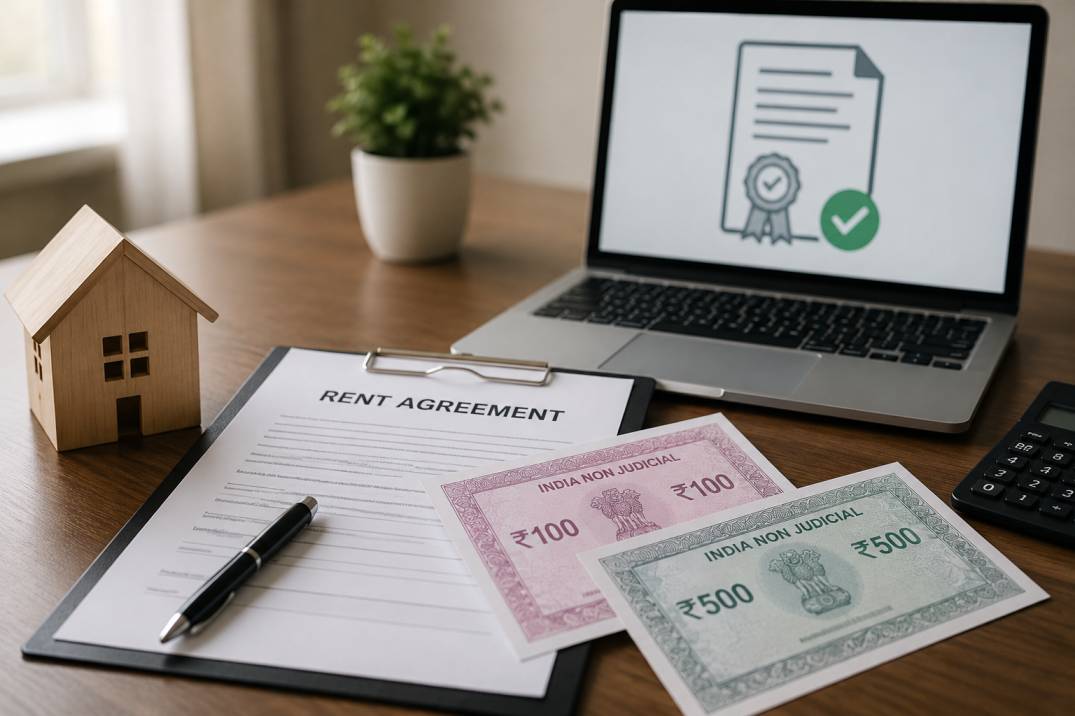
Automatic Procurement of Digital Stamp Paper: We arrange the required government-approved digital stamp paper as part of the process, helping you avoid the hassle of finding vendors or calculating stamp duty requirements.
Secure Identity Verification: All signatories can securely authenticate their identity and sign digitally from their respective locations, making the process simple and reliable.
Legally Structured Agreement Format: Our agreements are prepared in a format designed to clearly document the rights, obligations, and expectations of both landlords and tenants.
Faster Completion and Easy Access: Once completed, the signed agreement is available digitally, allowing you to access and download it whenever required.
Timely Renewal Reminders: Rental agreements are often forgotten until they expire. We send automatic reminders before the validity ends so both parties stay legally protected year after year. Join Us!
How the Rent Agreement Process Works with Law At Ease
Getting your rent agreement completed online is designed to be straightforward and hassle-free:
Step 1: Fill Details Online – Input basic information regarding the landlord, tenant, property parameters, and witnesses into a simple online form.
Step 2: Review Your Draft – Verify the automatically generated contract text on your screen and apply custom edits or specific clauses as needed.
Step 3: Complete Payment – Pay the processing fee securely online. The platform instantly calculates and attaches the legal digital stamp paper automatically.
Step 4: Sign and Download – All parties execute secure, remote digital signatures. Your legally binding, finalised rent agreement is ready to download immediately. Contact Us!
Conclusion
A rent agreement works best when both landlords and tenants actively participate in the process and ensure the terms are clearly documented.
If you're ready to create your rent agreement without the hassle of paperwork or office visits, Law At Ease offers a simple online solution to draft, sign, and download your agreement from anywhere. Get started today and complete your rent agreement in just a few easy steps.
Also Read:- How to Make a Rent Agreement Without Visiting a Lawyer or Government Office
Frequently Asked Questions
Can a rent agreement be changed after it has been signed?
Yes, but both parties must agree to the changes. Significant modifications should ideally be documented through a written amendment or a fresh agreement.
What should you do if there is a mistake in the rent agreement?
Any error in names, rent amount, property details, or dates should be corrected before signing. Even small mistakes can create confusion later if a dispute arises.
Is a witness mandatory for a rent agreement?
Requirements can vary depending on the state and type of execution. However, having witnesses sign the agreement can strengthen its evidentiary value if disagreements occur in the future.
Can a rent agreement be used as address proof?
In many cases, a valid rent agreement may be accepted as supporting address proof by banks, telecom providers, and other institutions, subject to their verification requirements.
What should you check before accepting a draft rent agreement?
Apart from rent and deposit details, verify the property address, names of all parties, lock-in period, maintenance obligations, and any special conditions that were discussed verbally.
Ab Rent Agreement ghar baithe!
Govt-authorised digital stamp paper, Aadhaar eSign for all parties, signed copy emailed. 10 min mein ready.
This article is general information, not legal advice on your specific matter. For advice on your own facts, talk to an advocate on Law At Ease.